When the War was Over: A Review of ‘Mundane Revolution’, by Andre Schmid
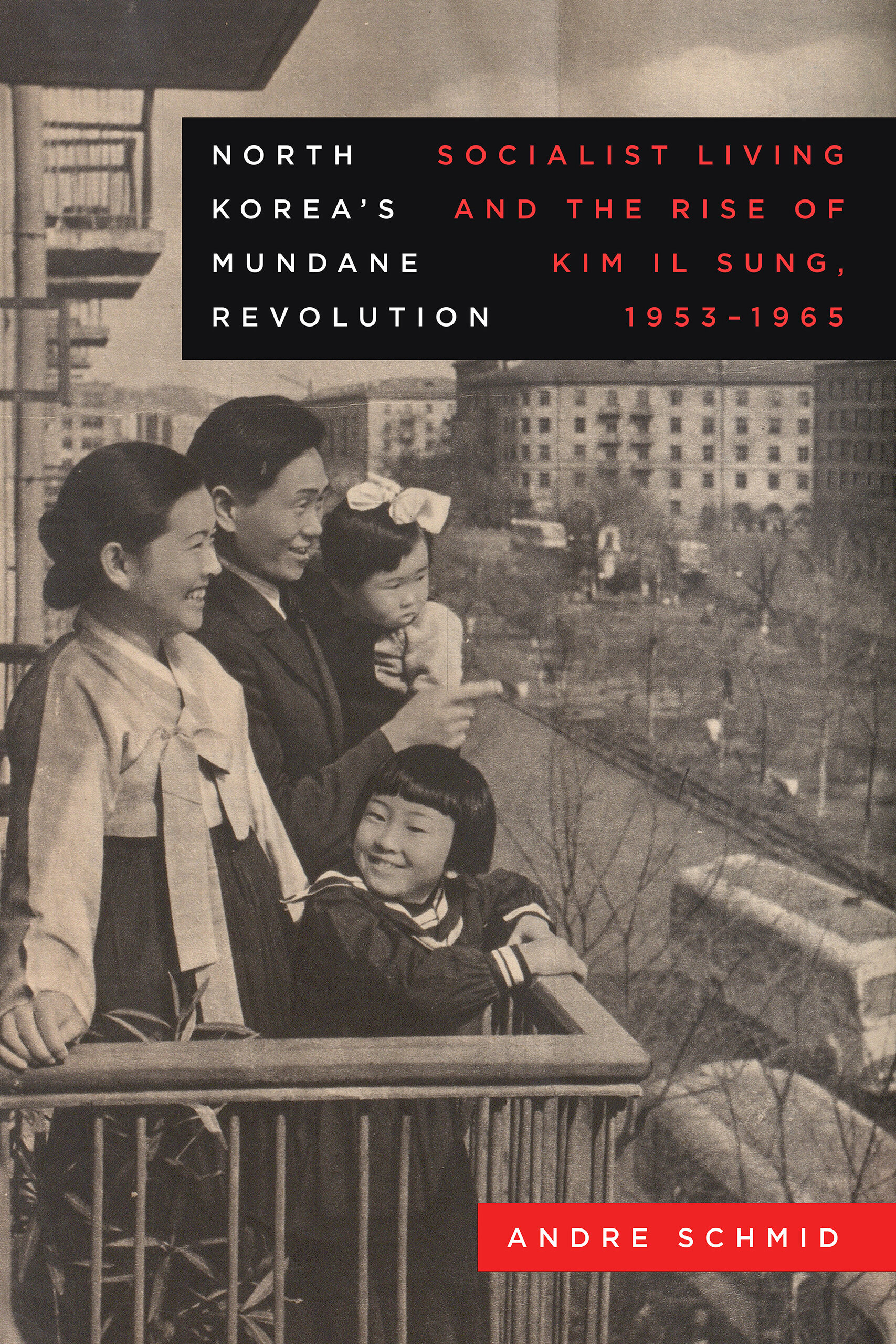
Andre Schmid. North Korea’s Mundane Revolution: Socialist Living and the Rise of Kim Il-sung, 1953-1965. Berkeley: University of California Press, 2024. 352 pp. ISBN 978-0520392847.
Andre Schmid’s work examines how the North Korean state sought to reshape society in the decade following the Korean War. This transformation occurred not through mass mobilization alone, but also through the regulation of everyday life. Schmid argues that seemingly ordinary practices, including housing arrangements, domestic routines, workplace norms, and cultural consumption, played a central role in embedding socialist ideals and consolidating state power. In tracing how these practices were shaped by policy and ideology, North Korea’s Mundane Revolution presents a social history of North Korea that challenges conventional, leader-centered narratives of revolutionary change.
Well-known in the field of Korean history for his influential book Korea Between Empires, 1895–1919 (Columbia University Press, 2002), which examines the intellectual and political strategies Korean reformers employed as they navigated between Qing Chinese and Japanese imperial influences, Schmid again demonstrates his ability to describe foundational historical processes through close analysis of primary sources. Rather than begin from political teleologies or regime-centered frameworks, Schmid builds his narrative from the ground up, drawing from newspapers, magazines, bureaucratic documents, and visual culture to reconstruct how the people of North Korea experienced, negotiated, and shaped structural transformation in the early post-war years.
Schmid structures his analysis through distinct yet interconnected thematic chapters. In Chapter 1, “The Everyday and the Revolutionary”, Schmid establishes the theoretical foundations of his analysis, suggesting that everyday routines, such as family interactions, labor practices, and leisure activities, were crucial components in the revolutionary transformation of North Korean society. He contends that “the revolutionary project in North Korea was deeply embedded within the ordinary, transforming daily practices into expressions of socialist consciousness” (p. 14).
Chapter 2, “Urbanization and Housing,” examines the extensive post-war reconstruction of the DPRK, focusing on urban planning and state-driven housing policies. Schmid shows how these initiatives were aimed not merely at physical reconstruction but at systematically reshaping societal structures and cultivating socialist identities. Housing policies, he notes, were “never simply about shelter; it was about remaking citizens into socialist subjects” (p. 57). Chapter 3, “Gender and Family Dynamics,” examines the state’s ambitious agenda for gender equality, analyzing its profound impact on traditional family structures and women’s roles in public and economic spheres. Schmid underscores the transformative potential of these policies, arguing that “women’s increased visibility in the workforce represented not just economic change but also an ideological shift toward socialist egalitarianism” (p. 94).
Chapter 4, “Work and Production,” addresses labor as a central theme in socialist identity formation. Schmid looks at how state policies carefully structured labor to reinforce socialist values and discipline. He argues that labor emerged as “a central pillar of revolutionary identity,” essential for cultivating and reinforcing socialist ideals (p. 123). Lastly, in Chapter 5, “Leisure and Culture,” the text explores the state’s cultural policies, highlighting how recreational activities and cultural productions were strategically employed to promote socialist values and loyalty to the regime. Schmid establishes that these cultural activities were integral, rather than ancillary, to ideological transformation.
Together, these chapters constitute an ambitious account of how socialist revolutions are enacted through the slow, uneven, and often contradictory reordering of everyday life. Schmid’s careful attention to gender, housing, and domestic labor ties the abstract goals of revolution to concrete, gendered, and domestic experiences. Schmid meticulously engages with an unusually wide range of primary sources for studies of North Korea, including government directives, serialized advice columns, visual propaganda, workplace cartoons, personal narratives, and foreign diplomatic reports. These sources are not merely illustrative; they are the substance of the history being told. As Schmid puts it, he aims to reconstruct “a mundane history of North Korea” by following “how Party-state goals were interpreted, circulated, resisted, or simply ignored in the everyday practices of socialist living” (p. 16). He closely reads planning documents on urban reconstruction, cultural materials like Women of Korea, and critical reportage from within the socialist bloc, showing how ideology was not just proclaimed but embedded in built space, domestic routines, and moral instruction.
Furthermore, Schmid’s treatment of Kim Il Sung is notable – it is indirect and contextual, distinguishing his work from conventional biographies or political histories. Rather than centering Kim Il Sung’s personal biography or focusing on his discrete political decisions, Schmid examines how the leader’s authority was exercised and reproduced through the diffusion of state policy into everyday life. Kim is less a central figure than a structural presence whose authority is felt more in institutional arrangements, ideological imperatives, and the mundaneness of daily governance than in direct political narration. In fact, Schmid writes in the introduction that, “my plan had been to complete this book without once mentioning Kim Il Sung by name. His absence would be the argument – a North Korean history without the man and his ego.” (p. 20)
While the book’s focus on the mundane aspects of everyday life is a strength, especially given the lack of such work on North Korea, it occasionally overshadows the broader political and economic dimensions of North Korea’s socialist revolution. Some readers may find the detailed attention to ordinary routines, while providing exceptionally rich context, occasionally feels monotonous, even boring, and detracts from the broader narrative. Additionally, Schmid’s expansive interpretation of revolution as a gradual, systemic transformation challenges traditional definitions that emphasize abrupt, radical shifts. This conceptual choice could prompt reflection on what constitutes revolutionary change in historical and political scholarship, or it might call into question whether what is being described is revolutionary at all.
Overall, North Korea’s Mundane Revolution makes a substantial contribution to Korean Studies, history, and comparative analysis of socialist regimes. Schmid successfully reframes North Korea’s socialist transformation by foregrounding the ordinary experiences of its citizens. His work offers novel insights for students and scholars seeking to understand the complex relationship between ideology, everyday practices, and social change under the (revolutionary) socialist government of North Korea in the years after the Korean War.