DPRK Media Review: Praising China’s ‘socialist modernisation’, opposing the West
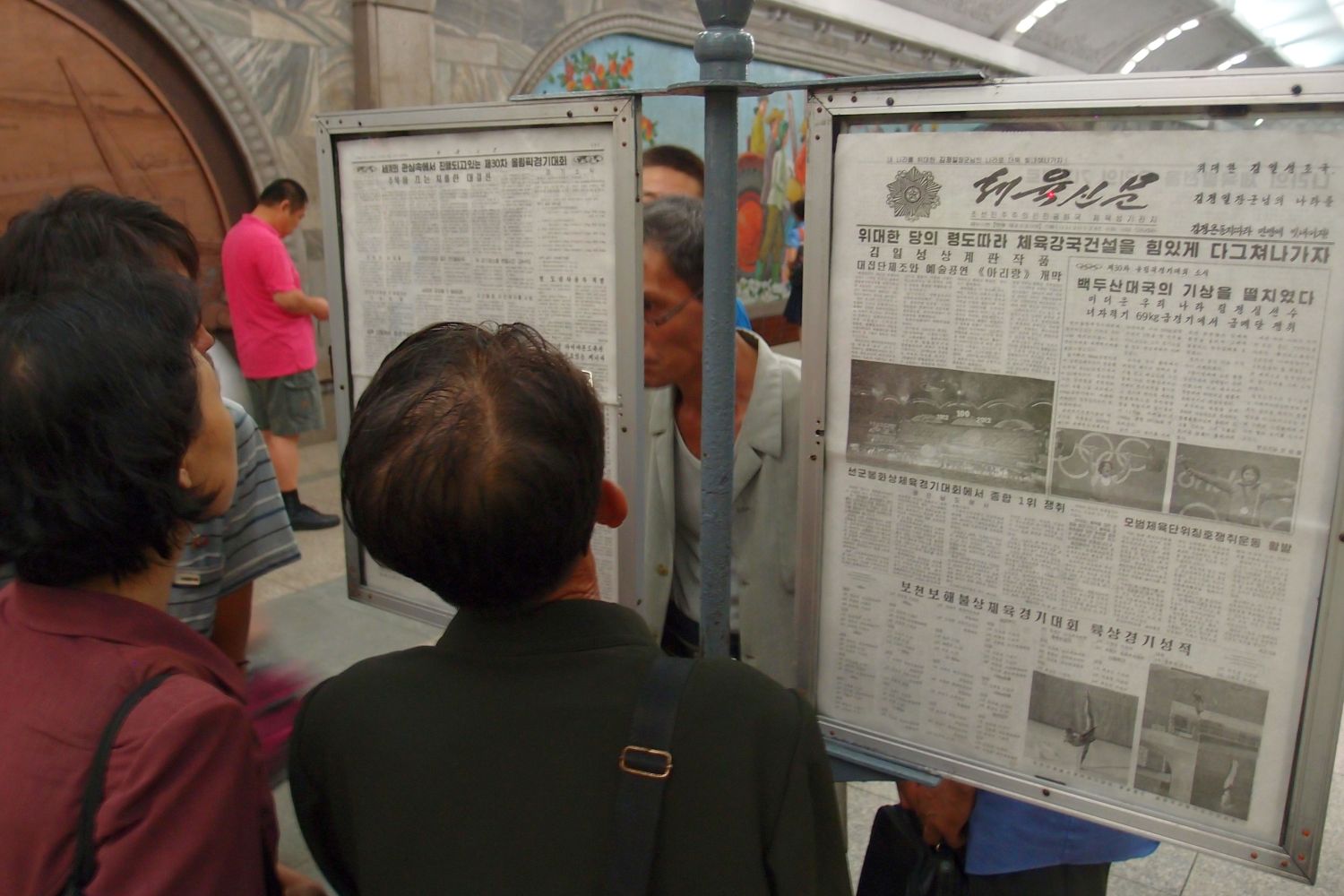
Image: Roman Bansen/Wikicommons
While July did not feature an event of comparable magnitude to the Xi-Kim summit in early June, last month was not without its share of China-DPRK pomp, courtesy of the 105th CCP anniversary, and the 65th anniversary of the Treaty of Friendship, Cooperation and Mutual Assistance which underpins their bilateral relationship.
Chinese Ambassador Wang Yajun hosted a banquet at the Chinese Embassy in Pyongyang to mark the CCP anniversary, attended by Kim Song-nam, director of the WPK Central Committee’s International Department, and a former Chinese-language translator for both Kim Il-sung and Kim Jong-il. A report on page two of the Rodong Sinmun on 2 July described China-DPRK ties as a “model relationship between the most powerful and strategic socialist states”, and called for expanded strategic communication and exchanges of “party-building experience” (중국공산당창건 105돐에 즈음하여 중화인민공화국 특명전권대사 기념연회 마련).
To mark the 65th anniversary of their 11 July, 1961 bilateral treaty, North Korea sent a delegation to China, led by Premier Pak Thae-song, as reported in the Rodong Sinmun on 10 July ( 조선민주주의인민공화국 당 및 정부대표단이 중화인민공화국을 공식방문한다). Chinese President Xi Jinping’s meeting with Pak included affirmations from both sides to strengthen ties in keeping with the 1961 treaty (조선민주주의인민공화국 내각총리 박태성동지가 중국공산당 중앙위원회 총서기, 중화인민공화국 주석 습근평동지와 만났다). A standalone article on the day of the anniversary praised the treaty and the bilateral relationship as “a long-standing alliance based on socialism, mutual support, and shared revolutionary ideals” (위대한 리념과 전투적우의로 맺어진 조중친선은 영원할것이다).
The historical nature of the alliance, and themes of shared sacrifice, were further heighted by a series of additional bilateral events including a visit by the North Korean leader Kim Jong-un to the Chinese People’s Volunteers Martyr’s Cemetery in Hoechang, South Pyongan province. There, Kim visited the grave of Chairman Mao’s son, Mao Anying, who was killed on North Korean territory during the Korean War, as reported in the Rodong Sinmun on 27 July (경애하는 김정은동지께서 조국해방전쟁승리 73돐에 즈음하여 중국인민지원군렬사릉원을, 찾으시였다).
Supporting China’s Socialist Modernisation
The Rodong Sinmun also had much to say last month on Beijing’s efforts to achieve technological modernisation, and to shore up its ideological foundations. This could be seen in reporting on the CCP “strengthening internal discipline, anti-corruption efforts, and ideological education to improve governance” and its advance towards “socialist modernisation goals” (날로 강화되는 중국공산당, 1 July).
The use of patriotic education and “revolutionary history” to educate young Chinese were also highlighted by the newspaper, (새세대교양에 힘을 넣고있는 중국, 2 July), as was Xi’s leadership in achieving these aims (새시대 중국특색의 사회주의사상문헌전람회 개막, and 중국공산당창건 105돐 경축대회 진행, both published on 3 July).
A notable theme in the DPRK news media: the role of AI in China’s progress. On 10 July, the Rodong Sinmun reported on China’s 15th Five-Year Plan, from 2026 to 2030, and its role in achieving the status of a modern socialist power, with emphasis on technological innovation, industrial modernisation, and AI development, under the leadership of the party amid mobilisation of China’s youth (강국건설과 민족부흥위업을 추진하고있는 중국). Xi was quoted as highlighting young scientific talent to achieve these ends (including twice on 11 July, 인재육성사업에 힘을 넣고있는 중국, and 습근평주석 과학기술발전을 위한 과업 제시).
The Rodong Sinmun reported on the World Artificial Intelligence Conference and High-Level Meeting on Global AI Governance in Shanghai last month as an opportunity by China, and Xi, to display leadership in this technology. The article noted that Xi used the opening of the event to call for countries to work together to establish a fair and equitable global AI governance system (습근평주석 공정하고 합리적인 전지구인공지능관리체계수립을 주장, 20 July).
The newspaper did not shy from reporting on problems in China, including a deadly factory fire in Fujian Province that killed 28 people (습근평주석 로동안전사고를 철저히 막을데 대해 강조, 12 July), and a landslide in Chongqing (습근평주석 중경시의 산사태피해와 관련하여 중요지시 하달, 21 July). In both instances, however, Xi was depicted as a proactive, responsive leader, demanding increased safety standards, search and rescue efforts and prevention of secondary disasters.
Condemning Common Enemies – the US and Japan
Amid widespread positive coverage on China, North Korea’s state and party news media continued their condemnation of both the US, and Japan. On 2 July, the day after the anniversary of the China-North Korea treaty, the Rodong Sinmun published an editorial attributed to “Eun Jeong-chol” (은정철) on the Korean War, calling the conflict a US-led multinational campaign to “suppress socialism and expand American global influence” (조선전쟁은 제국주의련합세력의 《반공십자군원정》이였다). The article went on to assert that the US was motivated to attack Korea due to its failure to contain socialism elsewhere, including in China in 1949, and claimed that North Korea’s “victory” over the US-led coalition had protected socialism and world peace.
However, Japan remained the main target of DPRK news media in July. The Rodong Sinmun mentioned Japan 96 times last month, compared to 46 and 24 references to the US and Israel respectively. On 2 July, North Korea’s main party newspaper reported on China’s condemnation of Japan at a UN Human Rights Council discussion for its treatment of women during World War II, describing the forced recruitment of “comfort women” (wartime sexual slaves) as “a serious crime against humanity”. The report called on Japan to reflect sincerely on its wartime aggression, and to address unresolved historical issues properly (일본의 반인륜적죄행을 규탄). Then, on 8 July, the Rodong Sinmun reported on China’s alleged “newly uncovered” wartime documents related to the Imperial Japanese Army’s Unit 516, and China’s argument that they provide evidence of Japan’s chemical weapons program during its invasion of China, which it claims were “a centrally organised state policy” (일제의 화학전만행을 폭로하는 자료 공개).
Reports of Japan’s World War II atrocities have escalated in the news media in China and North Korea as both countries have sought to establish historical patterns of aggression following the election of Japan’s Prime Minister Takaichi Sanae in late October 2025, as previously noted by Sino-NK. On 23 July, the Rodong Sinmun quoted a Chinese Foreign Ministry spokesperson criticising Japan’s alleged moves toward remilitarisation and potential nuclear armament as a violation of Japan’s pacifist constitution, which lacked public support (일본의 재군사화, 핵보유기도에 경고).
This militarism was the basis for China to impose export-control sanctions on a number of Japanese organisations (중국정부 일본에 대한 제재 실시, 1 July), criticise Japan’s “Free and Open Indo-Pacific” doctrine as fostering division and confrontation, and accuse Tokyo of interfering in China’s enduring standoff with Taiwan (분렬과 대결을 추동하는 일본의 쏠라닥질에 각성할것을 호소, 중일관계악화의 책임은 일본에 있다고 주장, 5 July).
The Rodong Sinmun also quoted China’s condemnation of Japan’s efforts to expand its military role in space (일본의 우주군사화책동을 규탄, 13 July), as well as unusually explicit remarks by Defence Minister Koizumi Shinjiro urging Japanese to discuss the taboo subject of nuclear weapons (일본방위상의 망발을 규탄, 24 July). The remarks have proven controversial in Japan; according to China and the Rodong Sinmun, they reveal Japanese intention to abandon its Non-Nuclear Principles and challenge the postwar international order.
Against the Western World Order
DPRK state and party news media in July again sided with China on a range of issues of friction with the West. The Rodong Sinmun noted that China was “responding firmly” to Western political, economic, and military pressure, rejecting US and Japanese criticism, and imposing countermeasures such as export controls on US entities. Its report on 4 July, the date of American independence, endorsed Beijing’s actions to protect its national interests, which it reported have broad domestic support within China (서방의 압박소동에 강경대응하는 중국). Otherwise last month, the newspaper reported that China responded “forcefully” to “Western pressure” by imposing export controls and sanctions on US, Japanese, and Australian entities, which it called “retaliation against” Western restrictions on Chinese companies (서방의 압박공세에 대한 중국의 강경대응조치, 13 July).
The Rodong Sinmun also repeated condemnation by China’s foreign ministry of proposed US sanctions targeting countries that import Russian oil and natural gas, deemed illegal unilateral measures lacking basis in international law or UN Security Council authorisation (미국의 비법적인 제재소동을 규탄, 18 July). The newspaper also reported on China’s announcement of export controls on 14 EU entities, a response to sanctions by Brussels on 14 Chinese companies under its latest Russia-related embargo package (유럽동맹의 제재조치에 대응, 27 July).
In a 7 July report, the Rodong Sinmun quoted China as rejecting criticism from the US and EU over its ethnic minority policies, arguing that all ethnic groups in China enjoy legal equality, cultural protection, and language rights, urging the US and EU to cease spreading “false information” and “interfering in China’s internal affairs” (자국의 민족정책을 헐뜯는 미국과 유럽동맹을 비난).
A week later, the newspaper reported on Beijing’s rejection of the NATO secretary general’s criticism of Chinese activity in the Arctic, arguing that its presence in the region is lawful under international law and aimed at promoting peace, stability, and sustainable development (중국 나토사무총장의 망발을 배격, 14 July).